Juneteenth in Flagstaff: Freedom, Labor, and Legacy Remembered

Honoring the labor, leadership, and community that helped build Flagstaff across generations.

Juneteenth, observed each year on June 19, is a celebration of freedom, resilience, and the long-delayed end of slavery in the United States. It marks June 19, 1865, when Union troops arrived in Galveston, Texas, and informed the last remaining enslaved people that they were free. More than two years after the Emancipation Proclamation had been signed.
Today, Juneteenth is a federal holiday observed nationwide through reflection, education, and celebration of Black history and culture.
In Flagstaff, its meaning also lives locally; in the people, families, and institutions that helped build and shape the community over generations.
The Foundation of Flagstaff’s Black Community
Flagstaff’s early development was shaped in part by Black railroad workers, lumber mill employees, and miners whose labor helped construct and sustain the region’s infrastructure and economy. While many individual names were not preserved in official records, their collective work formed a critical part of the city’s foundation.
Alongside this labor history, Black families built strong networks in the Southside neighborhood, creating spaces of stability through churches, schools, mutual aid, and community institutions during segregation and beyond.
As these community networks grew, so too did the fight for access, dignity, and equal participation in public life.
Why This Matters to Evans
Evans exists in Flagstaff, and that means we are part of a community with a history that did not begin with us and does not exist separate from us.
The Southside neighborhood, where much of this history is rooted, is not distant history: it is the foundation of the streets, businesses, families, and public spaces that still shape Flagstaff today. Many of the people named in this piece lived, worked, organized, and built the civic and cultural conditions that made this city what it is.
As a restaurant rooted in community, Evans recognizes that food spaces have always been tied to access, belonging, and exclusion. Juneteenth is not only a national observance. It is a reminder that those conditions were actively challenged and changed by people in this very place.
This piece is offered as acknowledgment: of history, of contribution, and of the people whose labor, leadership, and resistance shaped Flagstaff long before us.
Leadership, Education, and Civic Legacy
Several individuals stand out in Flagstaff’s history for their leadership in education, public service, and community development.

Wilson C. Riles – One of the earliest Black students at Arizona State Teachers College (now NAU), later principal of Dunbar School in Flagstaff. He went on to become a nationally significant education leader and the first Black statewide elected official in California, while also contributing to early educational equity work in Flagstaff.

Mel Hannah – Flagstaff’s first Black city council member and later a Coconino County Supervisor. He played a key role in expanding civic representation and was instrumental in broader African American civic organizing across Arizona.

Augustus H. Shaw Jr. – A distinguished educator, veteran, and community leader who helped shape Arizona’s educational landscape. Shaw graduated from Arizona State College in Flagstaff (NAU). After serving in the military, he established the Physical Education Department at Carver High School, later served as principal of Dunbar School for 13 years, and continued his leadership at Bethune School. His contributions to education have been honored by the Phoenix Elementary School District with the Augustus H. Shaw Montessori School.
Southside Life, Institutions, and Family Networks
The Southside neighborhood served as the heart of Black life in Flagstaff, sustained by families, churches, and educational institutions that carried the community through segregation.

Cleo Murdoch – A principal and educator at Dunbar School whose leadership shaped generations of students. The Murdoch Community Center is named in her honor, recognizing her lasting impact on education and community life in Flagstaff.

Katherine Hickman – A respected community member whose family operated a boarding house for Black sawmill workers, providing housing and support for families working in Flagstaff’s industrial economy. Over her lifetime, she remained deeply influential in the community and is honored as one of the founding members of Harbert Chapel A.M.E. Church, one of Flagstaff’s four historically Black churches.

Harbert Chapel A.M.E. Church – A cornerstone institution of Flagstaff’s Black community, providing spiritual guidance, cultural continuity, and community organizing space across generations.

Sally and Lloyd Chapman, Joan Dorsey, Ollie Mae Cottrell, and other Southside families helped sustain the neighborhood’s social fabric by building interconnected networks of support, education, and cultural life.
Civil Rights, Youth Activism, and Resistance
Flagstaff’s civil rights history includes key moments of student-led activism and community resistance to segregation.

Reverend Shirley Sims – A lifelong Flagstaff resident, NAACP member, and civil rights advocate. At just 14 years old, she was one of ten students who participated in a 1958 sit-in at El Charro Mexican Restaurant, challenging segregation in public accommodations. In 1962, while attending Flagstaff High School, Sims also participated in a student walkout following a racist incident at her prom. Students organized the protest in response, marking another moment of youth-led civil rights action in the city.
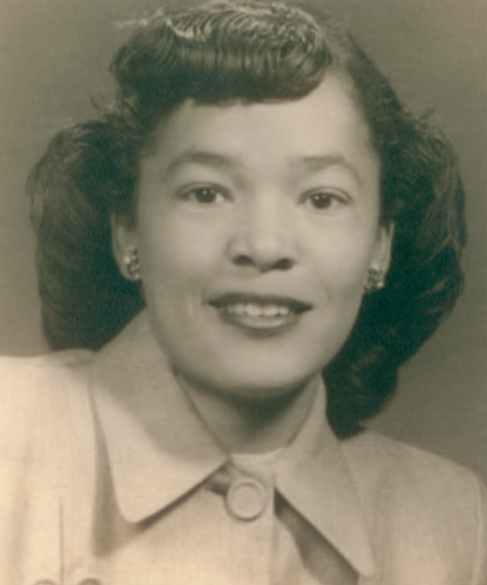
Annie M. Watkins – A civil rights activist who played a direct role in negotiating the desegregation of major Flagstaff establishments, including the Orpheum Theater and El Patio Café. Denied a teaching position in the 1950s despite holding a degree from Arizona State College (now NAU), she redirected her efforts into political organizing and voter education. Watkins led localized voter registration drives and worked to educate Black citizens on how to navigate complex ballots, strengthening civic participation during a period of significant exclusion.
Moses Winsley – A student leader whose experience became a catalyst for one of Flagstaff’s most significant youth-led protests. In 1962, Winsley was elected prom king at Flagstaff High School. When the white prom queen’s parents refused to allow her to be paired with a Black student, the decision sparked widespread student outrage. The result was a major student walkout and demonstration protesting the school’s handling of the event, marking a pivotal moment in local civil rights history.
Modern Civic Leadership and Continuing Legacy

Coral Evans – Former Mayor of Flagstaff and later a Coconino County Supervisor- She represents part of a longer story of Black leadership in northern Arizona. A third-generation member of the Dorsey family, Evans’s roots trace back to Flagstaff’s historic Southside and to her grandfather, Lynn Dorsey, who arrived in the early twentieth century to work in the lumber industry. Across generations, the Dorsey family has contributed to civic life, education, and community leadership, reflecting the enduring presence and influence of Black families in shaping Flagstaff’s history.
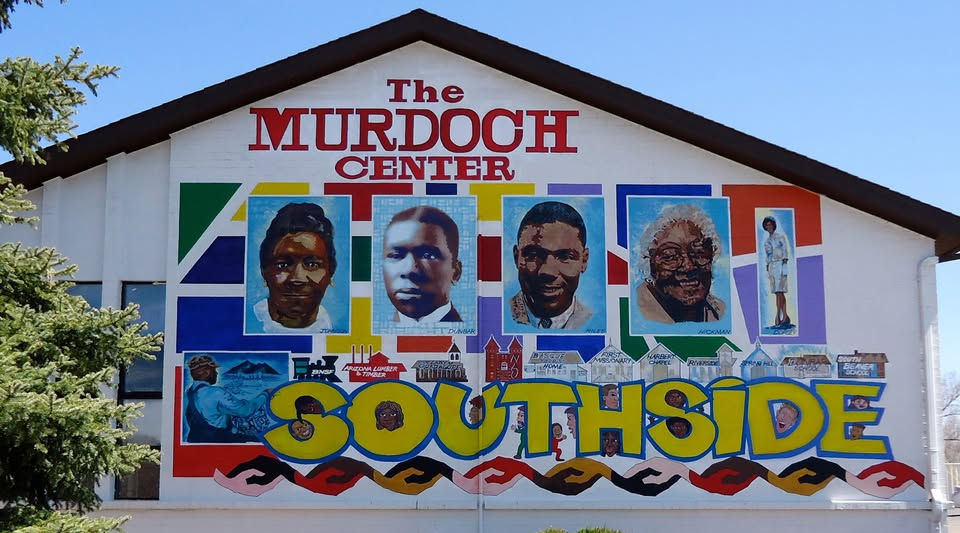
Murdoch Community Center – While Juneteenth celebrates freedom on a national scale, places like the Murdoch Community Center show how that history lives locally. Long connected to Flagstaff’s Southside and named in honor of educator and community leader Cleo Murdoch, the center stands as a reminder that Black history in Flagstaff is not only found in archives but in the spaces where communities gathered, organized, celebrated, and built lasting connections.
Honoring the Many Whose Names are Not Recorded

While many individuals from Flagstaff’s Black history are named and documented, there are countless others whose contributions were no less essential, even if their names do not appear in written records.
The growth and resilience of the Southside community were shaped by everyday acts of leadership; families who opened their homes, workers who endured long and difficult labor, students who challenged injustice, and neighbors who built networks of care and survival during segregation and beyond.
Many of these stories were never formally archived, but they live on through oral history, family memory, and the continued presence of institutions they helped sustain.
Juneteenth is also a moment to recognize this broader legacy: the unnamed railroad, lumber, and mining workers; the parents and elders who created stability where systems did not; and the generations of community members who quietly, persistently paved the way for those who came after.
Their impact is not absent simply because their names are. It is present in the foundations of Flagstaff itself.
The Importance of Juneteenth in Flagstaff
Juneteenth is both a national commemoration and a local reflection of lived history. In Flagstaff, it connects emancipation in 1865 to the people who built, shaped, and sustained the community through labor, education, faith, and civic action.
From railroad and lumber workers whose labor formed the city’s infrastructure, to educators like Cleo Murdoch, civic leaders like Mel Hannah, and educators and veterans like Augustus H. Shaw Jr., this history is deeply rooted in both struggle and community-building.
Closing Thought
Juneteenth is a reminder that freedom in the United States was delayed, contested, and carried forward by generations of people who refused to accept its limits.
In Flagstaff, that legacy lives not only in national history but in local institutions, family networks, and community leadership that continue to shape the city today.
Sources / For More Information
This article draws on publicly available historical records, oral histories, and community archives documenting Flagstaff’s Black history, including the Southside neighborhood, civil rights activity, and local institutions.
Flagstaff Southside / Historic Southside Project (Murdoch Community Center archives and biographies of Cleo Murdoch, Wilson Riles, Katherine Hickman, Ollie Mae Cottrell, Shirley Sims, Mel Hannah, and others) https://www.historicsouthside.com/
Cleo Wilson Murdoch biography and Dunbar School history (Southside historical records) https://www.historicsouthside.com/cleo-murdoch
Shirley Sims' civil rights history, NAACP sit-ins, and student activism in Flagstaff https://www.historicsouthside.com/shirley-sims
Murdoch Community Center history and Southside redevelopment https://www.historicsouthside.com/our-purpose
NAU / Flagstaff Southside research on Black labor history, segregation, and community development https://nau.edu/stories/black-history-southside-neighborhood/
Documentation of El Charro sit-ins and student-led civil rights action in Flagstaff (NAACP youth organizing, 1958–1960)https://arizonahistoricalsociety.org/wp-content/uploads/2020/01/Resilience-Finals_small.pdf
Juneteenth overview and national historical context https://www.britannica.com/topic/Juneteenth
Flagstaff Juneteenth observances and community programming at the Murdoch Community Center https://www.nau.edu/stories/juneteenth-2022/
Context on Black labor, Southside development, and civic life in Flagstaff history https://public.destinyhosted.com/flagsdocs/2020/CCMTGF/20201201_1148/5061_Flagstaff%27s_Lived_Black_Experience_Strategic_Plan.pdf
Historical Image Acknowledgment: Evans Fish & Chips would like to thank the Murdoch Center for preserving and sharing local history. Historical photographs included in this article were sourced through the Murdoch Center website. Rights remain with original creators and collections where applicable.


Comments